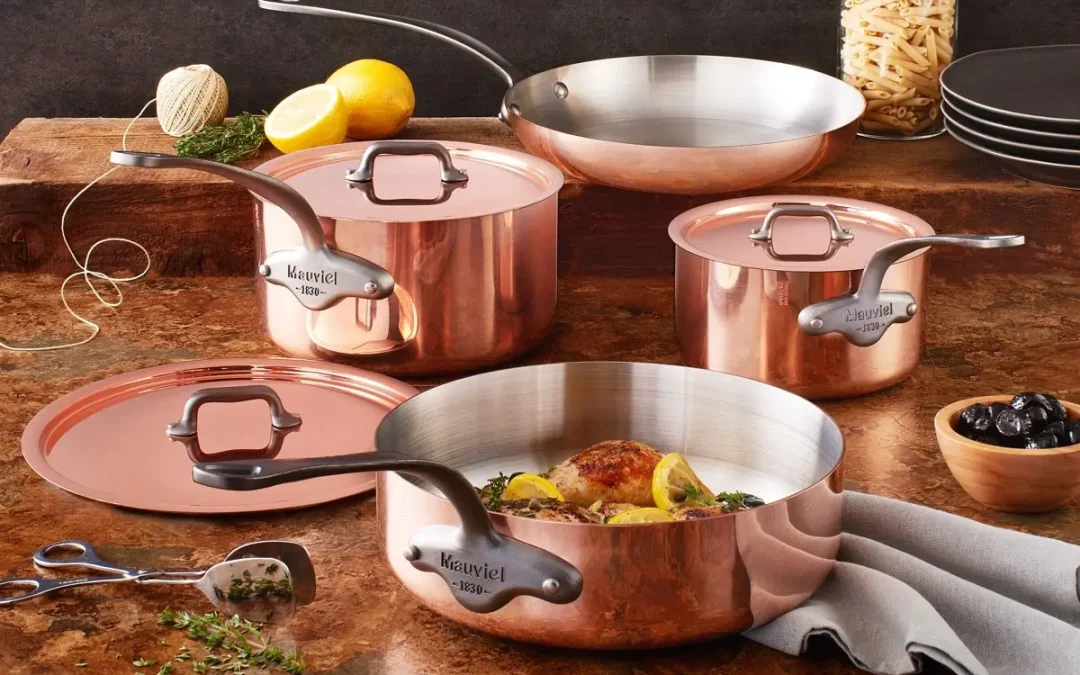
Copper cookware has long been revered by professional chefs and cooking enthusiasts alike, and for good reason. Beyond its stunning appearance, copper offers a range of benefits that can significantly enhance your cooking experience. Whether you’re a seasoned chef or a home cook looking to upgrade your kitchen, here are the top 10 benefits of using copper cookware.
1. Superior Heat Conductivity
Copper is renowned for its excellent heat conductivity. It heats up quickly and evenly, eliminating hot spots and allowing for precise temperature control. This means your food will cook more evenly, reducing the risk of burning or undercooking certain areas. Whether you’re searing a steak or simmering a delicate sauce, copper cookware ensures consistent results every time.
2. Responsive Temperature Control
One of the key advantages of copper cookware is its responsiveness to changes in temperature. Unlike other materials, copper adjusts rapidly when you raise or lower the heat, giving you greater control over your cooking. This is particularly useful for delicate dishes that require careful attention to temperature, such as caramel or hollandaise sauce.
3. Durability and Longevity
Copper cookware is built to last. When properly cared for, high-quality copper pots and pans can last for decades, if not generations. Many copper cookware pieces are lined with stainless steel or tin, providing additional durability and making them resistant to wear and tear. Investing in copper cookware is a long-term investment in your kitchen.
4. Health Benefits
Copper cookware is often lined with a non-reactive metal like stainless steel, which prevents the copper from reacting with acidic foods. This makes copper cookware a healthy choice for cooking, as it doesn’t leach harmful chemicals into your food. Additionally, some studies suggest that cooking with copper can have antimicrobial properties, contributing to a cleaner cooking environment.
5. Aesthetic Appeal
There’s no denying the beauty of copper cookware. With its rich, warm hue and elegant design, copper adds a touch of luxury to any kitchen. Displaying copper pots and pans on a hanging rack or open shelves can enhance the overall aesthetic of your kitchen, making it feel more welcoming and sophisticated.
6. Versatility
Copper cookware is incredibly versatile, suitable for a wide range of cooking techniques. From frying and sautéing to boiling and simmering, copper can handle it all. Its excellent heat conductivity makes it ideal for both high-heat cooking and low, slow simmering. Whether you’re making a quick stir-fry or a slow-cooked stew, copper cookware delivers top-notch performance.
7. Energy Efficiency
Because copper heats up quickly and evenly, you can often cook at lower temperatures, which can save energy. This efficiency not only benefits your cooking but also reduces your energy consumption, making copper cookware an eco-friendly choice for the environmentally conscious cook.
8. Improved Cooking Performance
Professional chefs often choose copper cookware for its superior performance. The precise temperature control and even heat distribution allow for greater accuracy in cooking, leading to better-tasting and more consistent dishes. Whether you’re an experienced chef or a passionate home cook, copper cookware can help elevate your cooking to the next level.
9. Easy Maintenance
While copper cookware does require some maintenance to keep it looking its best, it’s relatively easy to care for with the right tools. Regular polishing with a copper cleaner will keep your cookware shining, and the stainless steel or tin lining makes the interior easy to clean. With proper care, your copper cookware will remain a stunning and functional part of your kitchen for years to come.
10. Even Heat Distribution
The exceptional heat distribution of copper cookware ensures that your food cooks evenly. This is especially important for dishes that require uniform cooking, such as baked goods or delicate sauces. With copper, you can avoid the frustration of unevenly cooked meals and achieve perfectly cooked dishes every time.
Conclusion
Copper cookware offers a unique combination of beauty, performance, and durability that’s hard to match. Whether you’re looking to improve your cooking precision, add a touch of elegance to your kitchen, or simply enjoy the benefits of faster, more even cooking, copper cookware is an excellent choice. By investing in high-quality copper cookware, you’ll not only enhance your culinary skills but also enjoy the lasting benefits of this timeless material.
Choosing the right cookware is crucial for anyone looking to improve their cooking experience. Two of the most popular options are nonstick and stainless steel, each offering its own set of advantages and potential drawbacks. Understanding the differences between these types of cookware can help you make an informed decision about which is best for your kitchen. Let’s dive into the key features, benefits, and considerations of nonstick and stainless steel cookware.
The Basics: Nonstick Cookware
Nonstick cookware is known for its easy-release surface, which prevents food from sticking and makes cleanup a breeze. This type of cookware is typically coated with a nonstick material, such as Teflon, or more modern alternatives like ceramic.
Advantages of Nonstick Cookware:
Easy to Clean: One of the biggest advantages of nonstick cookware is how easy it is to clean. The nonstick surface prevents food from adhering, so you can often wipe it clean with a sponge and warm water.
Low-Fat Cooking: Nonstick cookware allows you to cook with less oil or butter, making it a healthier option for those watching their fat intake. This is ideal for cooking delicate foods like eggs, pancakes, and fish.
Affordable: Nonstick cookware is generally more affordable than stainless steel. It’s widely available and comes in a variety of price ranges to suit different budgets.
Ideal for Beginners: Because of its forgiving nature, nonstick cookware is great for beginners. It’s easy to use and reduces the likelihood of food sticking or burning.
Drawbacks of Nonstick Cookware:
Durability: Nonstick coatings can wear off over time, especially if exposed to high heat or if metal utensils are used. This can reduce the effectiveness of the nonstick surface and may require replacement more frequently than stainless steel.
Heat Limitations: Nonstick cookware is not suitable for high-heat cooking methods, such as searing or browning, as the coating can degrade at high temperatures.
Care Requirements: To maintain the integrity of the nonstick surface, you need to use non-metal utensils and avoid abrasive cleaning tools.
The Basics: Stainless Steel Cookware
Stainless steel cookware is prized for its durability, versatility, and ability to withstand high temperatures. It doesn’t have a nonstick coating, but many high-quality stainless steel pans feature a multi-layered construction with an aluminium or copper core for improved heat distribution.
Advantages of Stainless Steel Cookware:
Durability: Stainless steel cookware is highly durable and resistant to rust, corrosion, and staining. With proper care, it can last for decades.
Versatility: Stainless steel cookware is suitable for a wide range of cooking techniques, including searing, browning, deglazing, and oven roasting. It can withstand high heat and is safe for use in the oven and under the broiler.
Even Heat Distribution: High-quality stainless steel pans often have an aluminium or copper core, which ensures even heat distribution and reduces the likelihood of hot spots.
No Chemical Coatings: Stainless steel cookware doesn’t have any chemical coatings, making it a safe choice for cooking at high temperatures. It’s also non-reactive, meaning it won’t alter the taste or colour of acidic foods like tomatoes or vinegar-based sauces.
Drawbacks of Stainless Steel Cookware:
Sticking: Unlike nonstick cookware, stainless steel pans don’t have an easy-release surface. Food can stick if the pan isn’t properly preheated or if insufficient oil is used, which can make cleanup more challenging.
Requires Practice: Cooking with stainless steel requires a bit more skill and practice. You need to master techniques like preheating the pan and using the right amount of oil to prevent sticking.
Price: High-quality stainless steel cookware can be more expensive than nonstick options, though it’s often considered a long-term investment due to its durability.
Which Should You Choose?
The decision between nonstick and stainless steel cookware depends on your cooking style, needs, and preferences. Here’s a breakdown to help you choose:
Choose Nonstick Cookware If:
You prefer low-fat cooking and want to use less oil or butter.
You cook delicate foods like eggs, pancakes, and fish that are prone to sticking.
You want something easy to clean and maintain, especially for everyday use.
You’re a beginner or cook at lower temperatures.
Choose Stainless Steel Cookware If:
You enjoy high-heat cooking methods like searing, browning, or deglazing.
You’re looking for durable cookware that can last a lifetime with proper care.
You don’t mind the learning curve and are willing to invest time in mastering cooking techniques.
You want cookware that’s versatile enough to go from stovetop to oven.
Conclusion
Both nonstick and stainless steel cookware have their merits, and the right choice depends on your specific cooking needs and preferences. Nonstick cookware is perfect for easy, low-fat cooking and quick cleanup, while stainless steel offers versatility, durability, and superior heat performance. Many cooks find that a combination of both types of cookware offers the best of both worlds, allowing them to tackle a wider variety of recipes with ease. Consider your cooking habits and the types of dishes you prepare most often, and you’ll be well-equipped to choose the cookware that best suits your kitchen.
Induction-compatible cookware is a significant area of focus for Mauviel. To this day, Mauviel maintains its unrivalled reputation for quality and design in its professional chef goods. Currently, household markets can purchase similar products.
With 1,000 products, Mauviel offers several ranges of high-quality products made from copper, stainless steel or aluminium.
What is Induction Cooking?
There are significant differences between induction cooking and traditional gas or electric cooking, some pans are not compatible with induction cooktops or burners. A copper coil beneath the cooktop generates electromagnetic energy, which heats compatible cookware in induction cooking. As a result, heat is produced inside the pan rather than beneath the glass, enabling the cooktop surface to cool down quickly after the pan is taken out.
Compatible induction cookware materials:
Enameled Steel
Cast Iron
Stainless Steel designed for induction cooking
Finding
Induction Compatible Cookware
Which cookware is not compatible with induction cooktops?
Non-compatible cookware won’t harm your induction cooktop, however, it also won’t heat your pot or pan. Cookware made of ceramic, glass, aluminium, copper, or stainless steel that isn’t magnetic will ultimately not function. When you try to utilize cookware that isn’t compatible with your induction cooktop, some of them will flash an error code or indicator light.
Non-compatible induction cookware materials:
Glass
Ceramic
Non-magnetic copper and aluminium
Non-magnetic stainless steel
Finding pots and pans that match the bill might not be as difficult as it appears. Mauviel has a special range called the “Induction” range with many unique pieces for your every need. The prices may vary depending on the type and size of the product you are looking for. With such a varied selection and different sizes of cookware compatible for induction you could decide between different types of Stainless-steel lids, Cocottes, Saucepans, Frying pans and Rondeaus.
Have a look at our induction-ready cookware selections here: Induction Cookware
How to choose the best cookware to use with induction:
Every cookware product in our Induction range is best to use and induction-ready. To test if a pot or pan you already own will work, place a magnet on the bottom of it. If the attraction is strong, proceed with cooking.
Mauviel’s History:
Few people are aware of the brilliant designer Ernest Mauviel’s initial name, but the goods produced at his age-old workshop, which was established in 1830 are highly recognized worldwide. His enormous passion has been passed down to his successors. Mauviel 1830 is able to grow and foresee trends in cooking without losing its essence.
Originally made of copper, a noble material that is by definition the best heat conductor, the goods were intended for specialists. Instead of being limited to only one type of metal, the company has been able to experiment and grow, creating products using steel, cast iron, aluminium, and most commonly, multi-layered stainless steel, which has properties comparable to those of copper.
Mauviel 1830 is the only firm in the world with the ability to shape so many materials, placing it at the pinnacle of quality, all thanks to its innovative and modern mentality.
With a strong commitment to advancement, while maintaining heritage, the firm demonstrates true modernity in its ideas for the extremely demanding culinary industry. As a visionary who specializes in product commercialization, Valérie who took over the family-run company in 2006 is well-liked by elite chefs who are enchanted by her assortment of culinary tools. Valérie is a living example of a nearly 200-year-old successful manufacturer that has managed to uphold its tradition while imposing modernity and gaining the confidence of both the public and renowned chefs.
Culinary Equipment Company is a leading supplier of premium industrial kitchen & catering equipment, with a wide range of world-class heritage brands used in the world’s leading kitchens and is the trusted supplier of Muaviel cookware in South Africa.
For every cooking enthusiast, copper will become a want at some point but how do you cook with copper cookware? It is not generally purchased by your average cooker, as it comes with its fair share of considerations when cooking.
Copper is however a stunning piece of cookware to have hanging in your kitchen. With its shiny golden surfaces, it will immediately capture one’s attention but is it easy to cook with?
Why Copper?
Copper has significant cooking qualities, one being Copper is one of the best conductors of heat there is. On that same note, because of that one quality, it expands into the qualities of having excellent temperature control – meaning just as quickly as it heats up, it cools down. Copper also distributes heat evenly, one of its most desirable kitchen qualities.
How to
Cook with Copper Cookware:
Copper is as sensitive as it is expensive. Therefore cooking techniques and certain ingredients are important to note. If you’re not careful your cooking may have a slightly more metallic taste to it than it should. Copper leaching into your food is not the worst case unless you’re frequently ingesting amounts of it.
Here are a few ways to ensure a satisfactory experience when cooking with copper cookware:
Opt for High Quality
Most Copper cookware comes lined with either stainless steel, tin, or nickel. Pure copper is rather left to those who are experienced and well-versed in cooking with copper. This is because pure copper has a few considerations that come into play when cooking. whereas lined copper cookware has a more versatile use and is still beginner-friendly.
Have your ingredients prepped
With its ability to heat up quickly, you reduce cooking time significantly. This means everything happens slightly faster than normal. So it is good to have your ingredients prepared and ready to go.
You should also note that your pan must always have something in it when placed on the stove to heat up. You will melt away your lining if you leave it on the stove to heat up without, an oil base or even butter.
Cook with medium to high heat
If you are new to cooking with copper, it is best to start on a slightly lower heat so that you can get used to the copper idiosyncrasies.
Use the right utensils
Copper is a sensitive metal and therefore can be damaged easily if not correctly looked after and used. Using either silicone or wooden utensils will ensure that you do not scratch your copper cookware and damage it. However over time when the lining does start wearing out you can have it replaced or repaired. Try to make sure this is only the case because of wear and tear and not because you were not cautious with your utensils and cleaning.
Copper is expensive therefore it is fundamental to know that if you’re willing to spend that money you should care for it well and it will perform and last long, making your investment worth it.
Copper in the oven? Yes
The heat of the oven will not affect the copper cookware as long as there is water in the food that can keep the temperature of the pan at a standard boiling point.
Induction tops
Copper does not work with induction tops as they are a nonmagnetic material. Therefore any copper cookware and those with aluminum or nonmagnetic stainless steel cores can’t interact with the electric field of the induction top.
What you can cook in copper pans
Copper is perfect to use when you need good searing, sauteing, cooking sauces, and or jams.
However, when making a sauce, avoid using acidic ingredients to prevent a reaction with copper.
Post Cooking Care
Cleaning your copper cookware is not that difficult, you just need to follow the basics:
Purchasing cookware for your home should be an investment and therefore the durability of the utensils you are buying needs to be considered. Copper, once worked becomes extremely tough and was even used in ancient times to make weapons and tools. In a kitchen, cookware must be durable as it is used heavily. Cooper’s hard-wearing properties and its natural corrosion resistance ensure your copper pots, pans and cookware will last you for many years. Copper cookware is built to last you a lifetime and will never need to be replaced allowing you to enjoy your cookware forever.
2. It’s beautiful to look at
It’s hard to argue that copper cookware doesn’t look beautiful on both the stovetop and the dinner table. Cookware made from copper is not only practical but also stylish thanks to its burnished shine that’s able to elevate any kitchen’s interior. Copper is popular in modern interiors but is also a staple in traditional homely kitchens making it a perfect way to combine trendy and timeless in your home kitchen. Its unique beauty allows you to display your cookware as decor items when not in use.
3. It’s easy to clean
Contrary to popular belief copper cookware is extremely easy to clean and care for. It can be easily cleaned with just soap and water and if it becomes tarnished simply soaking a dish towel in lemon juice, applying table salt on top of it and rubbing the pot will quickly get rid of those troubling spots. Copper’s conductivity also means you don’t need to cook with high heat ensuring you won’t have to scrap off burnt food from your cookware.
4. It’s easy to handle
The weight of copper cookware is also a benefit for home cooking as it will sit securely and safely on your stove and isn’t very heavy to lift.
5. It has a higher conductivity than other cookware
Copper allows heat to spread evenly throughout the cooking surface stopping some areas from becoming hotter than others. For home cooks, this means your food is less likely to burn and stick to the bottom of your pot or pan. This evenly spread higher conductivity rate also means your copper cookware has better heat retention, which can result in you using less electricity or gas when cooking your meals. Copper cookware is also perfect for temperature-sensitive dishes as its conductivity allows it to respond to heat changes quickly and enables you to regulate the temperature easily.
6. It has health benefits
Copper has anti-bacterial qualities and is also an essential trace mineral, this mineral is crucial for a healthy diet. This means when you boil water and cook food in copper cookware your meals can be slightly infused with this mineral which comes with many health benefits. Introducing copper into your kitchen isn’t only a functionality and aesthetic choice but also a healthy lifestyle choice.
To experience all the benefits of cooking with copper at home explore Mauviel’s extensive range of beautiful handmade copper cookware crafted in France. When purchasing these exquisite pieces of copper cookware you are investing in cookware that will last you a lifetime, allowing you to pass it down from generation to generation. Copper cookware will ensure your family has many opportunities to enjoy beautiful meals and create special memories.
Cookware sets can be a worthy investment when you know how to harness the set capabilities fully. There are a vast range of sets available in the market. From the cheaper more affordable options to the more expensive professional ranges to certain materials. A quality set can last you a lifetime.
We are going to provide you with tips on the essentials and why you should invest.
Copper Cookware Benefits
Determining The Essentials:
Many cookware sets, can be difficult to navigate. Many people don’t know what each pot or pan’s purpose in a set is. The material factor plays a role too as many cookware sets are priced according to material quality and the brand.
Consider the following factors when purchasing a set:
How well the material of the set will conduct heat
The cost and if that cost is justified
Longevity and durability
Material reactions
Cleaning and maintenance
Cooking sources
Once you know what’s most important, buying will be quicker and simpler.
Most commonly, the smaller cookware sets come in 3’s or 5’s; larger ones range from 8 to 10 pieces. Mainly comprised of your standard saucepan, a small casserole pot, and a casserole pot one size bigger. Your set of 8 would include two frying pans and two saucepans with one Dutch oven. These typically have different combinations of pots and pans as certain types perform more than one purpose or solely one main purpose.
Generally, your most common cookware sets are made up of the following:
Saucepan
If you’re cooking something that is mainly liquid, this pot comes with a lid and works suitable for this kind of food. Great for simmering, stewing and even making soups. Because of its shape, it will heat and cool down quickly. Whether it’s stainless steel or enameled cast iron.
There are a multitude of different foods that can be made in a saucepan.
Frying pan
When you need something cooked quickly, a frying pan is a good choice to have. You can make quick stir fries or even deep-fried foods. Most frying pans do not have lids and therefore it can limit your cooking capabilities. However, it still has a good range of quick easy meals that can be made.
Stockpot
A good stock pot is necessary in all kitchens. Stockpots are deep pots that allow you to cook whole foods and fit them in the pot directly. you can fit a whole chicken or spaghetti and other pasta without worrying about spillage because the pot is deep.
Casserole pot
Every cooking enthusiast should own a casserole pot that is extremely versatile and can cook for large gatherings. The best material for a casserole would be cast aluminum or cast iron. Indulge in cooking an array of different delicacies.
Dutch ovens
These pots are stove and oven-friendly making them an extremely desirable piece of kitchen equipment. In slow cooking and achieving a perfect sear, the Dutch oven retains heat exceptionally well. You can use this pot.
Research what your best cooking tools would be for the specific meals that you prepare on a regular. This helps you understand what pots and pans perform what tasks and how important they are to have in your specific kitchen. You can always buy them individually if they’re not all sold in a set. This being said many standard cookware sets are worthy because they cater to most common cooking practices, but curated sets are more specific to you and your cooking.
These are some additional pots and pans to consider:
A skillet – sometimes also referred to as a frying pan, is a pan that can be categorized as an all-purpose one. Usually, you have a choice of stainless steel, cast iron, or nonstick. Each serves a different purpose – Stainless steel is the most versatile, cast iron is best for various heating sources from your stove to oven, and nonstick is for your delicate foods.
A Wok – because of their size and structure you can cook a multitude of things in it. Woks vary in size and weight, make sure to measure your stove size and match the wok to it. Cook everything from stirfry to noodles and enjoy the excellence of this pan
Saute pan – for cooking something with especially high heat, this is your pan. perfect for basting and cooing anything with techniques that build flavor with constant movement. stainless steel is your best material for a saute pan.
These are the various pieces that make up a cookware set, you can build your own or buy one or more to create a limitless variety of cookware options for yourself. You now have the necessary knowledge of what essentials you need and how to go about purchasing cookware sets. Just follow the basic considerations and it should make shopping much easier.
Cleaning your cookware set
There are various methods of cleaning cookware based on the material it is made of. Remember different textures and materials react differently to certain materials.
Care for your cookware sets as they can be quite pricey. Copper cookware is extremely delicate and we advise you invest in copperbril to clean and use light soaps and scrubbers to wash them. Stainless steel will most likely be your easiest to clean, it’s not very problematic, cast iron too, and then nonstick are urged to be cleaned gently to avoid scratching off the stick coating in the pan.
Visit Culinary Equipment for top-quality cookware that performs well. Choose from a wide selection of cookware options available today. You can even pop in and visit our showroom where our superb sales team will assist you further.
To provide the best experiences, we use technologies like cookies to store and/or access device information. Consenting to these technologies will allow us to process data such as browsing behavior or unique IDs on this site. Not consenting or withdrawing consent, may adversely affect certain features and functions.
FunctionalAlways active
The technical storage or access is strictly necessary for the legitimate purpose of enabling the use of a specific service explicitly requested by the subscriber or user, or for the sole purpose of carrying out the transmission of a communication over an electronic communications network.
Preferences
The technical storage or access is necessary for the legitimate purpose of storing preferences that are not requested by the subscriber or user.
Statistics
The technical storage or access that is used exclusively for statistical purposes.The technical storage or access that is used exclusively for anonymous statistical purposes. Without a subpoena, voluntary compliance on the part of your Internet Service Provider, or additional records from a third party, information stored or retrieved for this purpose alone cannot usually be used to identify you.
Marketing
The technical storage or access is required to create user profiles to send advertising, or to track the user on a website or across several websites for similar marketing purposes.